The Battle of Gwyr 1136

Before 1066 in Wales
- The Saxons ruled England, but Wales, for the most part had it’s own leaders (Lords, Princes mainly) ruling individual parts of the country.
- Deheuberth, Ceredigion, Caerfyddin, Powys, Bannau Brychyniog and GOWER/Gwyr in the South.
- Gwynedd, Conwy, Powys in the North.
- Many times the princes fought amongst themselves, also repelling Viking and Irish raids. The princes had castles for protections and administration. Some rich people were also landowners e.g. Urien in Gower
- Some leaders, like Hywel Dda of Whitland (the grandfather of Prince Einon) formulated their own laws and the country had its own language and Christian Celtic Saints after which many of the towns today are named. E.g. Llan Elli, Llan Teilo, Merthyr Tydfil.
The Norman Conquest 1066
- In 1066 the Normans sailed from Normandy to battle with the Saxon King Harold at Hastings, for William to take the English crown that had been promised to him by Edward the Confessor.
- The Normans rapidly took over the English counties, and also take over the lands of South Wales. Then 1071 they march into Scotland.
- De Neuburgh is assigned the Gower area and hurriedly build mott and baily castles in Swansea, Oystermouth, Loughor, Penrice, Llanrhydian and Oxwich. Mills are built so that taxes can be taken.
- 1086 the Domesday Book is created so that appropriate taxes can be taken from all people.
The Norman Lineage
- 1066 King William the Conqueror
- 1087 King William II (Rufus of the red hair)
- 1100 Henry I (fourth son of the Conqueror leaving his elder brother Robert the ruler of Normandy)
- 1114 Henry’s daughter Matilda marries the Emperor of Germany .
- 1120 Henry’s son and heir, after visiting Normandy with his courtiers is drowned in ‘the White Ship’.
- 1125 Death of Henry’s son-in-law. 1127 The Empress Matilda remarries Duke of Anjou – so a huge chunk of France is part of the Norman empire. Henry declares that his daughter is his heir and barons ratify.
- 1135 Henry I dies suddenly of a surfeight of Lampreys. Matilda is recalled.
The Norman Civil War
- 1135 Before Matilda reaches Britain, her cousin, Stephen de Blois (grandson of the Conqueror and nephew of Henry) takes the crown in Winchester Cathedral, and backed by the majority of the barons, is declared King of England.
- Stephen’s title to the Crown is confirmed by the Pope
- King David of Scotland invades England to support Matilda
- Matilda enters London and is driven out.
- Civil War begins in Britain.
The Welsh response
- During this time of unrest in the Civil War between the Norman factions, the Welsh realise that there is an opportunity to recover some of their lands in Wales.
- 1136 on 1st January - led by Hywel ap Meredudd, Lord of Brycheiniog, the Welsh travel to an open area between Loughor and Swansea and do battle with the Normans who have taken over the lands of the Gower. They surround the knights and according to reports there was wholesale slaughter of over 500 knights. The bodies horribly devoured by wolves.
- The Battle of Gwyr.
- The Welsh Rebellion begins.
The Battle of Gwyr 1136
(in an open space between Swansea and Llwchwr)
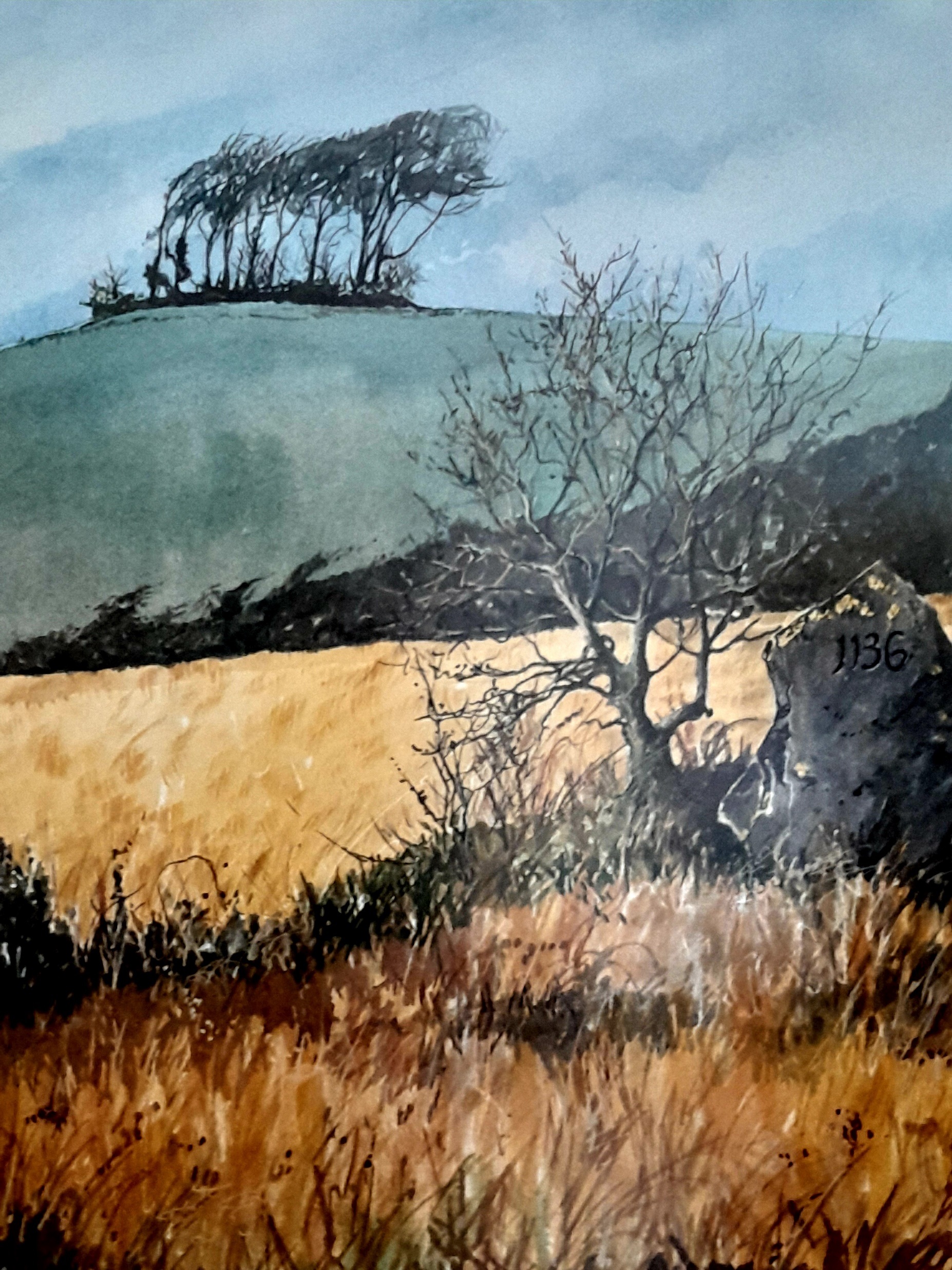
An original oil painting by Stephenson of the Swansea Art Soc. Purchased at the Taliesin gallery 2006
and owned by Huw Llywelyn Davies. Committee member.
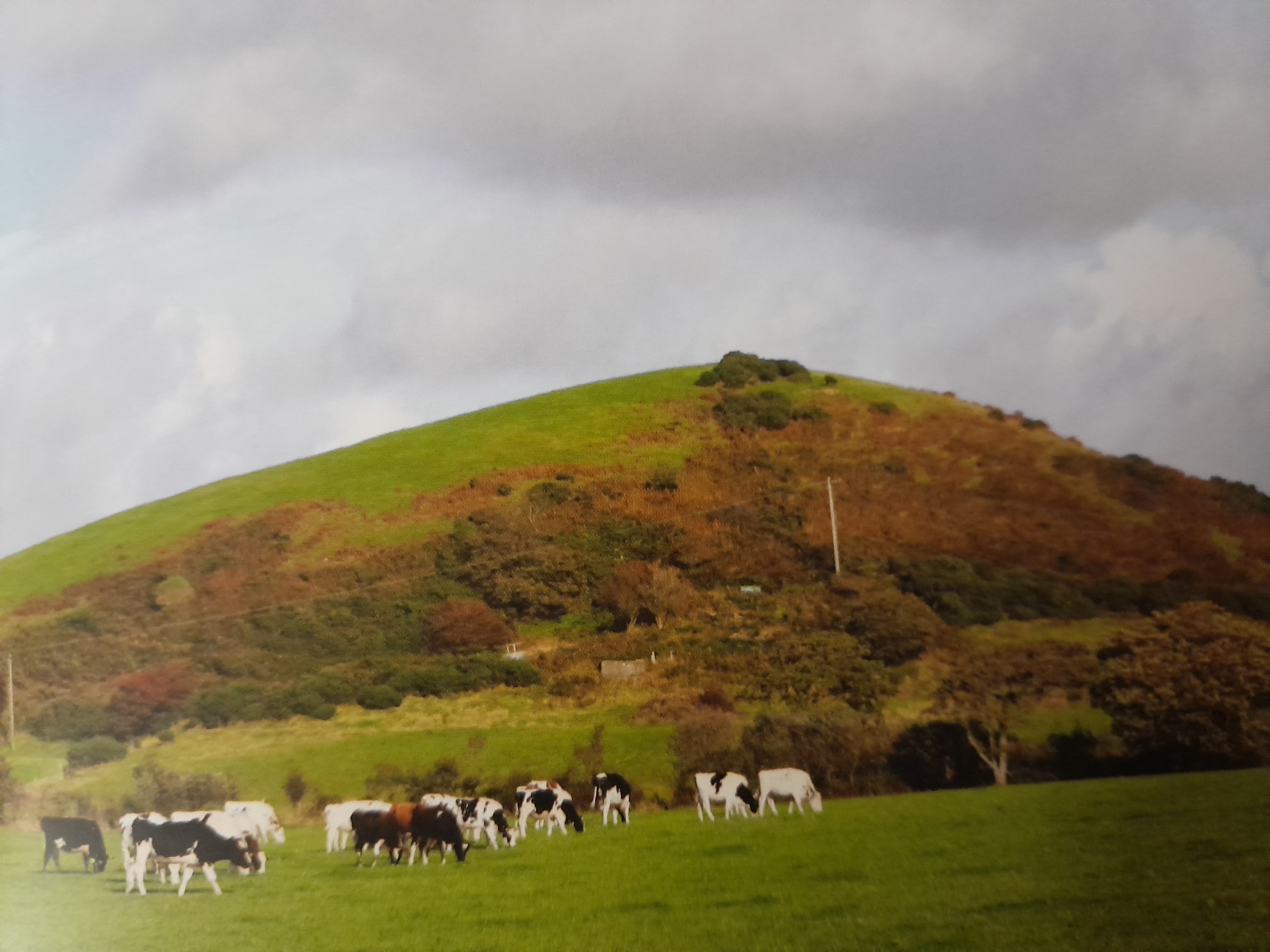
The site chosen for the Memorial Stone in an open area on Garn Goch. Showing the raised area behind where – possibly, the leaders could view the battle taking place
The Welsh Rebellion
- The Battle of Gwyr was the catalyst for the start of wholesale rebellion against the Norman Conquerors.
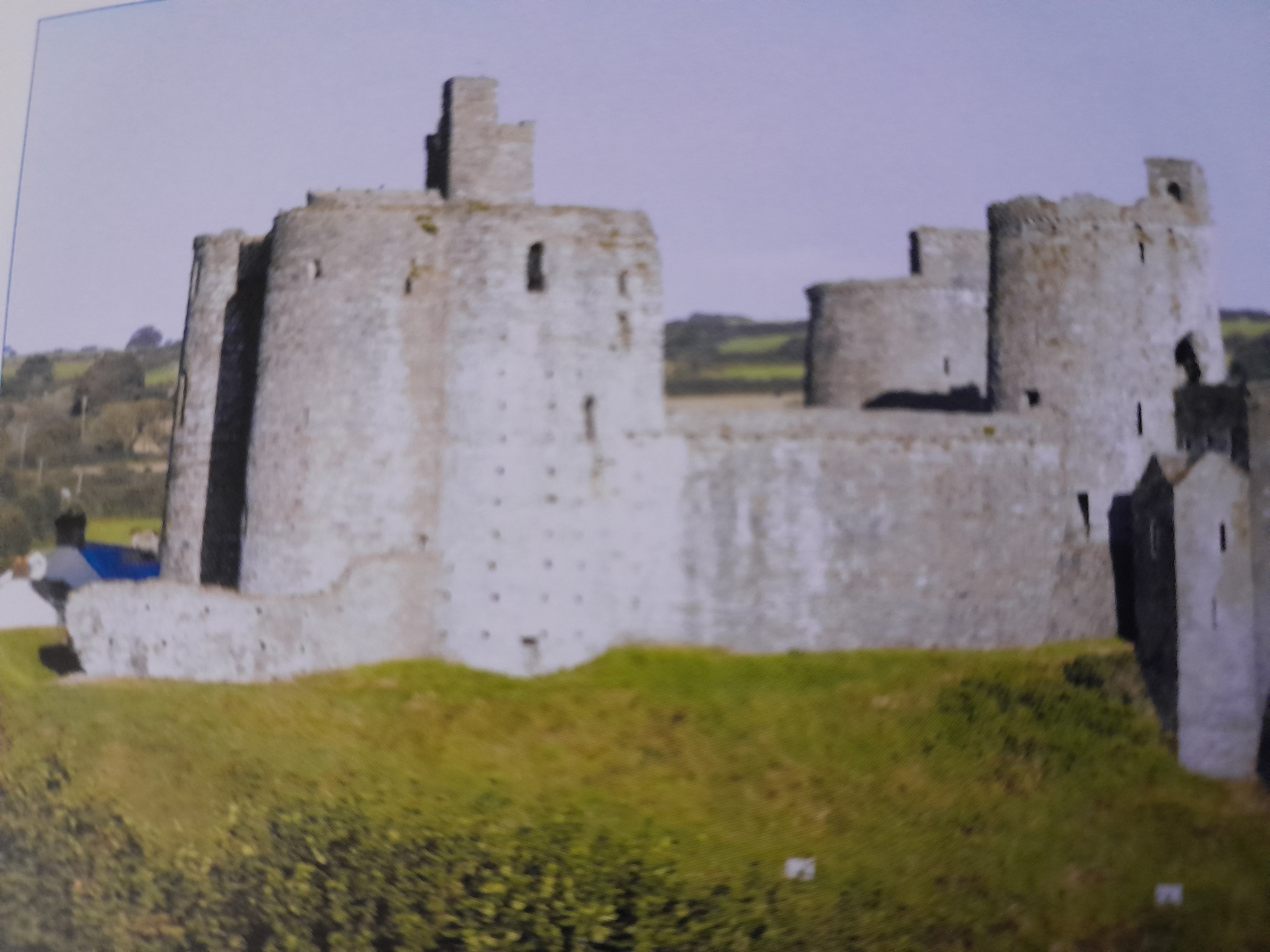
- Gwenllian, the wife of a lord of Kidwelly castle, when her husband is elsewhere, attacks the Norman garrison there. She fails, and is beheaded, but her husband returns and regains the castle.
The Welsh Rebellion
- In Ceridigion, there is a huge pitched battle of Crug Mawr. It is at this battle that the Welsh Longbow is recorded as being in evidence for the first time. Superceding the smaller longbow, this 6 foot bow used by the Welsh could pierce the armour and chainmail used by the Normans.
1980
The battle to get Welsh culture recognised
- In the late 1970s/early 80s, a few people realised that this huge Battle site had been overlooked for centuries and many local people did not even realise the importance of the Battle of Gwyr. (English medium schools did not teach Welsh history until the past few decades – so a need for recognition)
- A Committee was formed comprising, Academics, craftsmen, ramblers, Churchmen, Teachers, civil servants, musicians and ordinary people who just loved Welsh culture.
- They approached local historians in the Swansea University to confirm the historical records. (Professor I W Rowlands of the History Department kindly did the research)
- They set about raising funds
- Planning permission from Swansea Council and the Commoners association was sought.
- They sourced materials, and when permission was given, prepared the site.
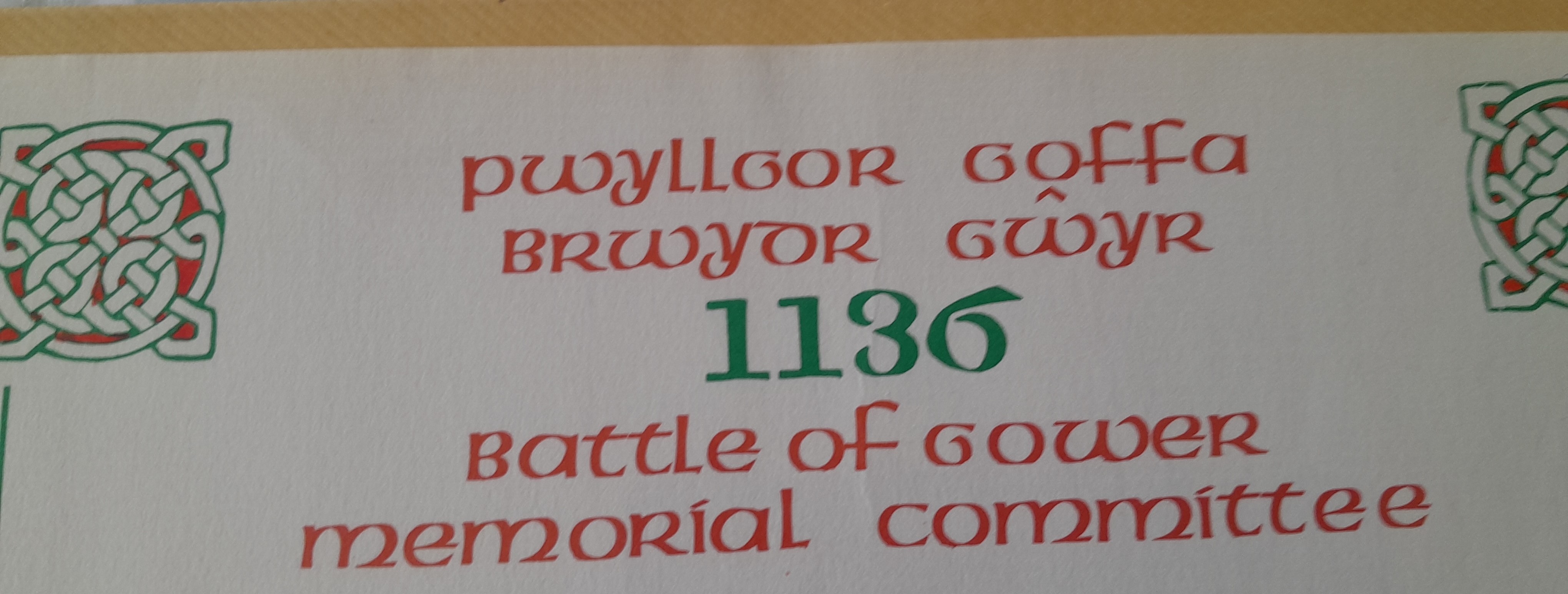
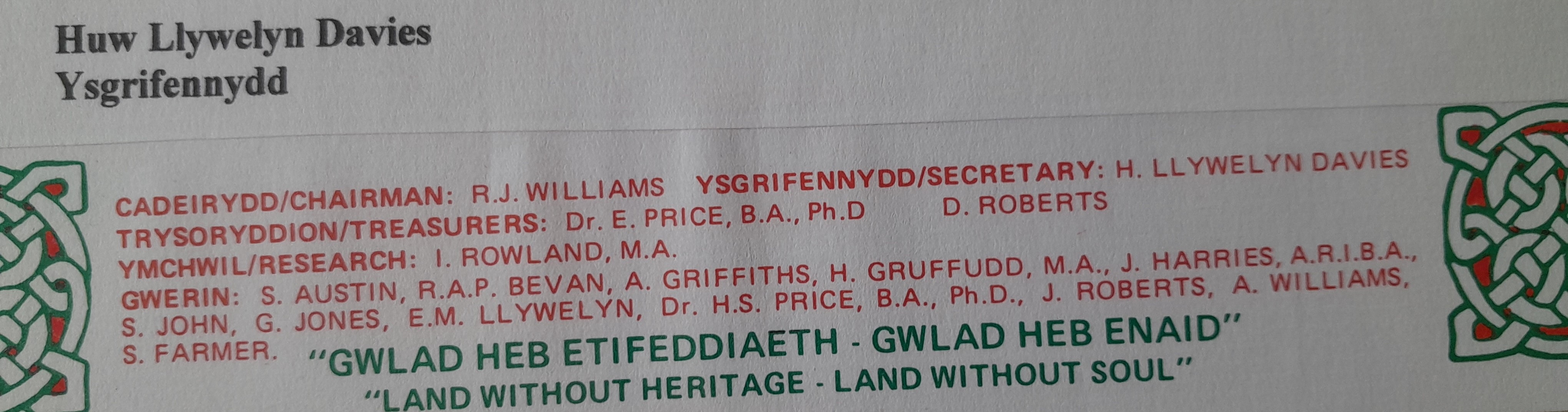
The Battle of Gwyr Memorial Committee
The Historical Records 1
- The earliest source was in 1140 by John of Worcester
- (locates the Battle in the Gower i.e. The Lordship, not the Peninsular)
- ‘After the death of King Henry I on the second of December (i.e.1135) there straight away took place on the first of January in Gower, a major battle between the Normans and the Welsh in which five hundred and sixteen from both sides (exhiis et ex illis) perished. Their bodies, scattered across the fields, were horribly devoured by wolves.
The Historical Records 2
- 1148 Probably compiled by a Bishop of Bath (a west country origin)
- But when King Henry died….. The Welsh, who always cherished a deadly hatred of their masters, broke the compact with him utterly, and appearing in bands in different places, they made hostile raids in various directions….they advanced into a district by the coast called Gower… And when knights and footmen to the number of five hundred and sixteen moved in one body against them, they surrounded them on every side and laid them all low with the edge of the sword’
The Historical Record 3
- Geraldus Cambrensis (Gerald of Wales) on his journeyings throughout Wales 1191.
- ‘From there (i.e.Swansea) we made our way through the open countryside(campestr) toward the River Loughor. Not long after the death of Henry I, Hywel ap Maredudd of Brycheiniog fought a pitched battle here against the local English, killing quite a few of the knights (milites)
- (Note: Gerald of Wales is quite an interesting person in his own right. Born in Manobier Castle. The grandson of the Princess Nest of Deheuberth and his father, was the Norman lord, William de Barri, he was of mixed background, FitzGilbert. Educated in the Church in Gloucester and Paris where he also taught Law, he had aspirations to the Bishopric of St Davids and to enhance this he accompanied ArchBishop Baldwin around Wales to gain supporters for a Crusade to the Holy Land. He did not get the Bishopric, rejected twice by the King (possibly his royal Welsh background went against him, but he has left Wales with a wonderful record of life in those far off days)
2. The Fund Raising
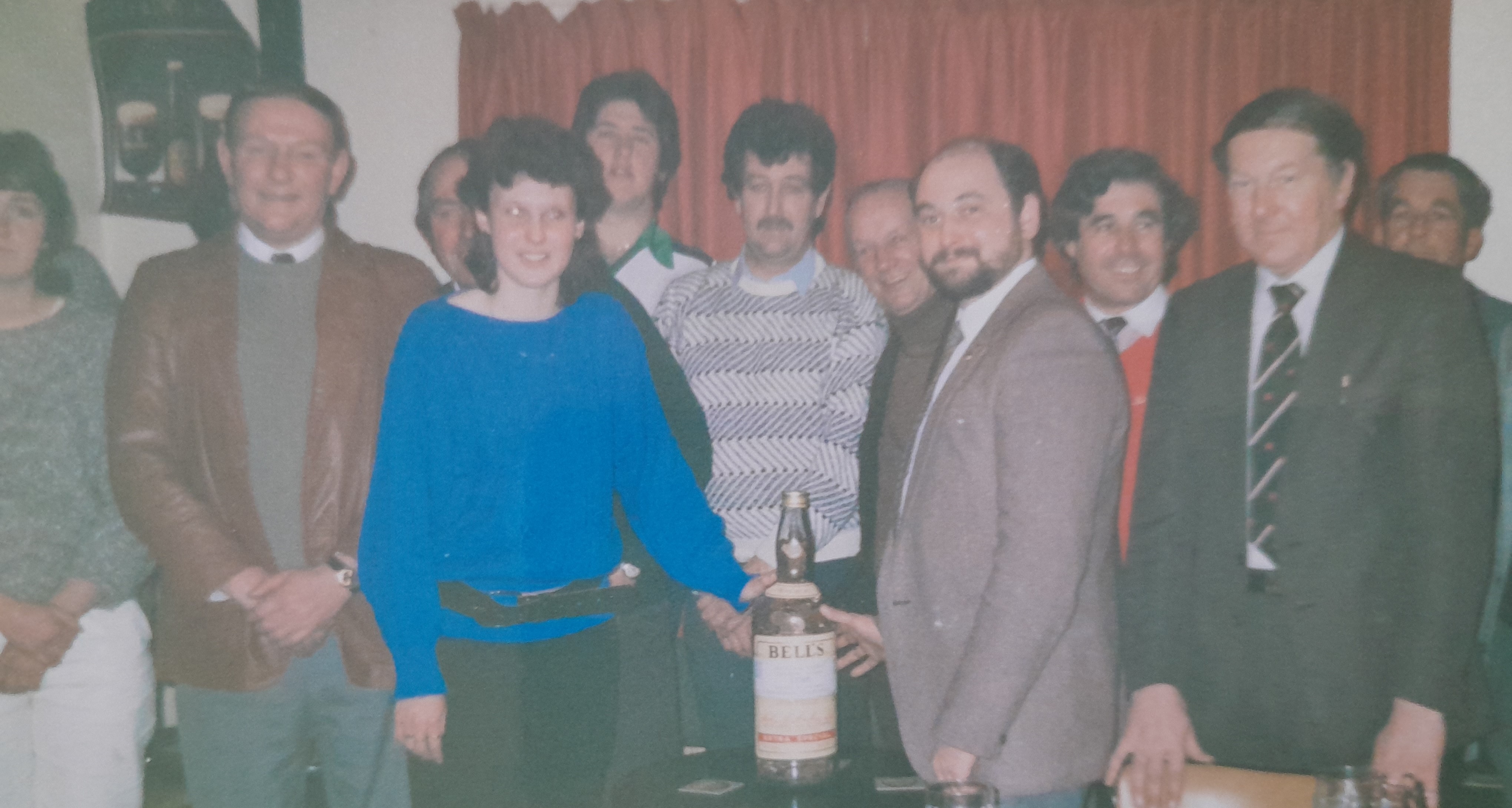
Money was raised by donations from individual members of the group, appeals to large institutions (3 Ms donated generously) and events in private houses, concerts in chapels, pubs etc.
3. Planning Permission
- The Swansea Council was consulted and planning permission sought for a site on the Garn Goch Common.
- Surprisingly, there was initially some opposition from political factions within the Council who regarded a memorial stone to Welsh History as tantamount to a subversive Welsh rebellion. So there was considerable delay in granting permission.
- The Commoners of Garn Goch were consulted and eventually they agreed that a memorial stone would not hamper any grazing rights.
- The Swansea Council allocated a raised round area that had once been the first Tee of a Victorian golf course that had been on the common. And the Planning was agreed.
The Designated Site.

4 Preparing the Site. – the logistics!
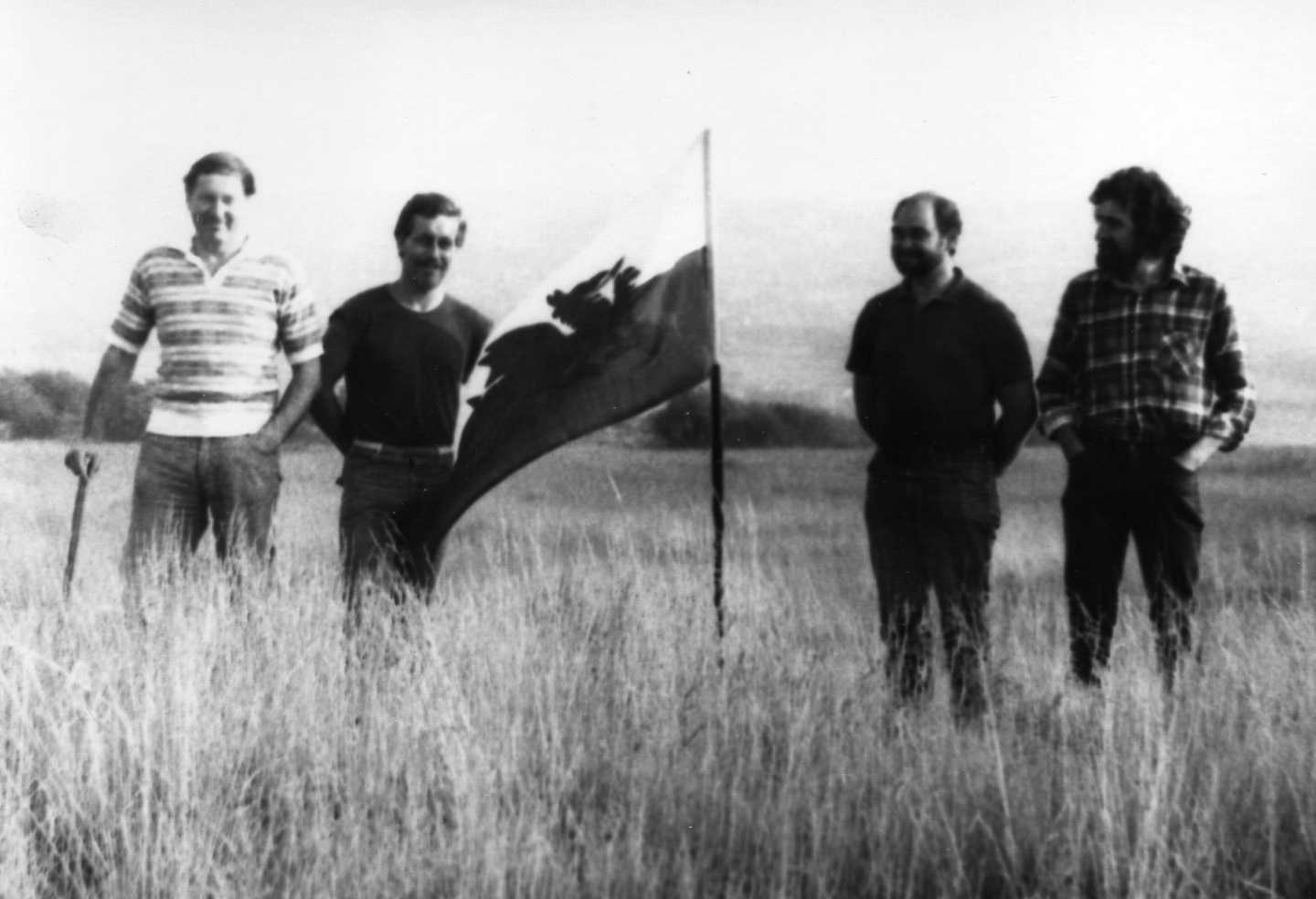
- The Committee realised that there would be a problem in moving a stone to the site allocated across some very boggy terrain, some 100 yards from the Hospital Road. They laid a small track of chippings and also consulted the local TAs who were happy to help as a community project.
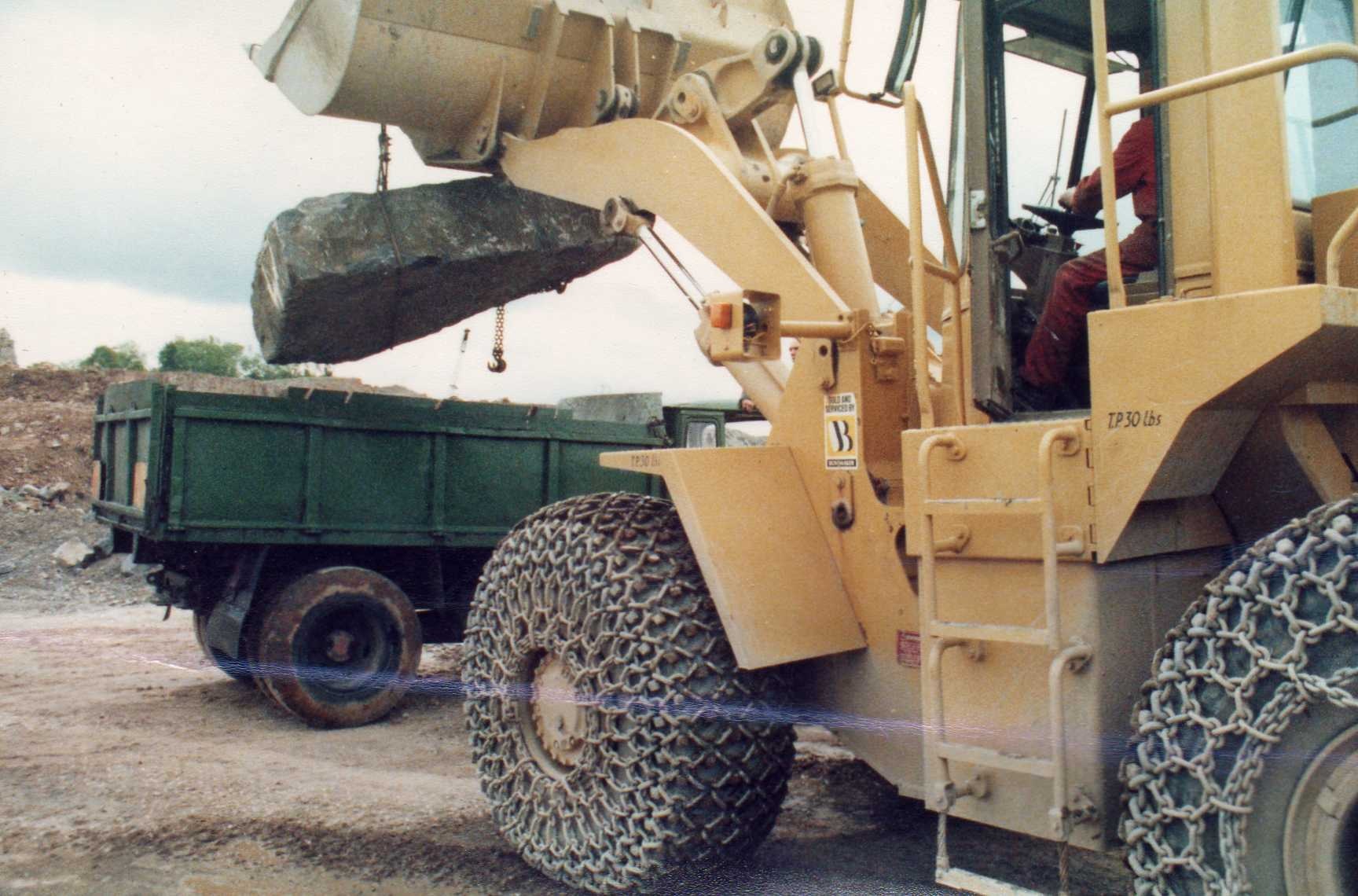
- Members of the Committee travelled to a Blaen Y Fan Quarry, Pontyates and chose the 10 foot Stone. (to allow 7 foot above ground and 3 foot buried in 2 cubic yards of concrete.)
- The Blaen Y Fan Quarry owner, a patriotic Welshman, thereupon kindly donated the Stone and, with their superb lorry, actually delivered it to the delegated mound at Garn Goch. The Site prepared beforehand and the trench dug by members of the Committee.
Choosing the Stone


Preparing the Site
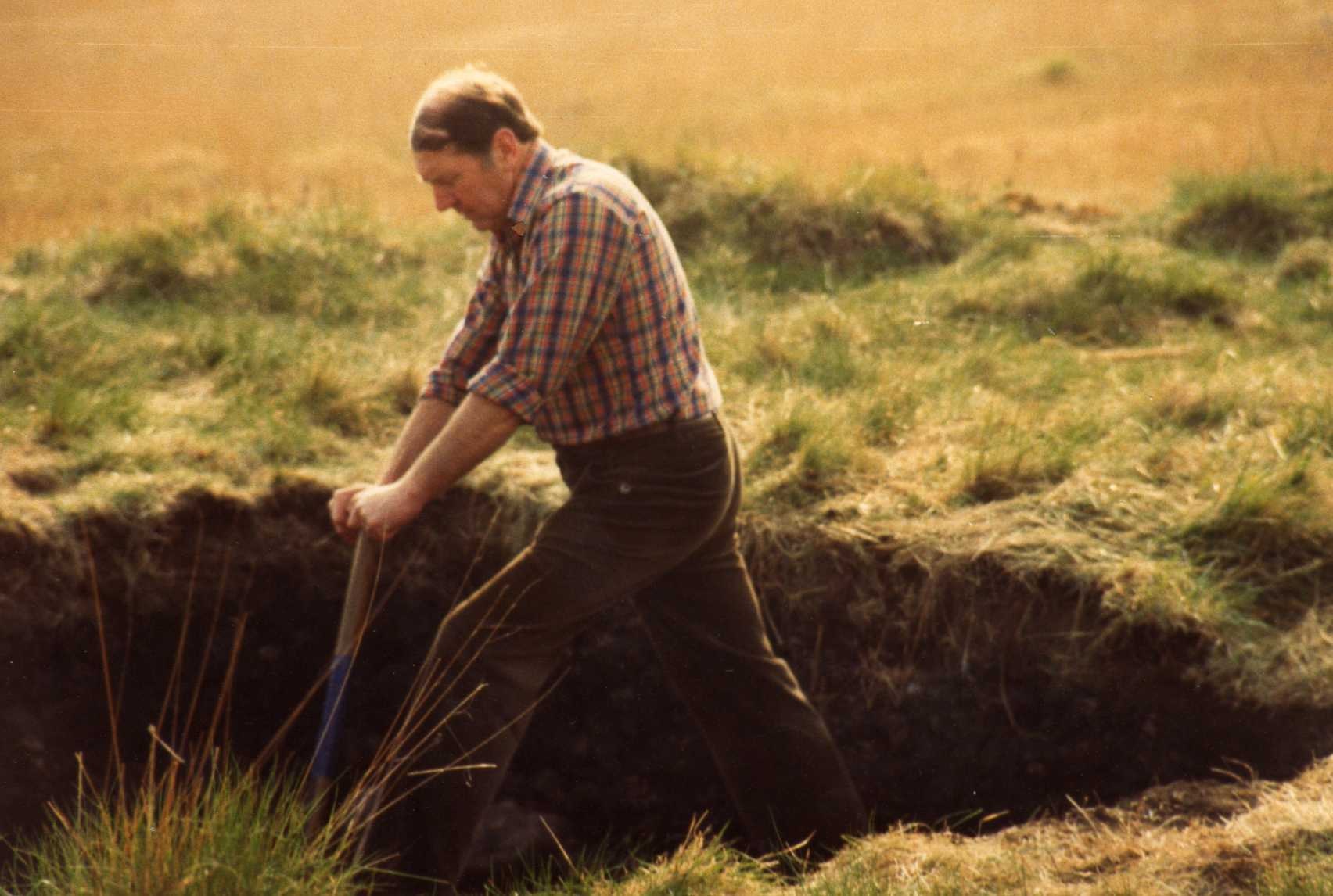
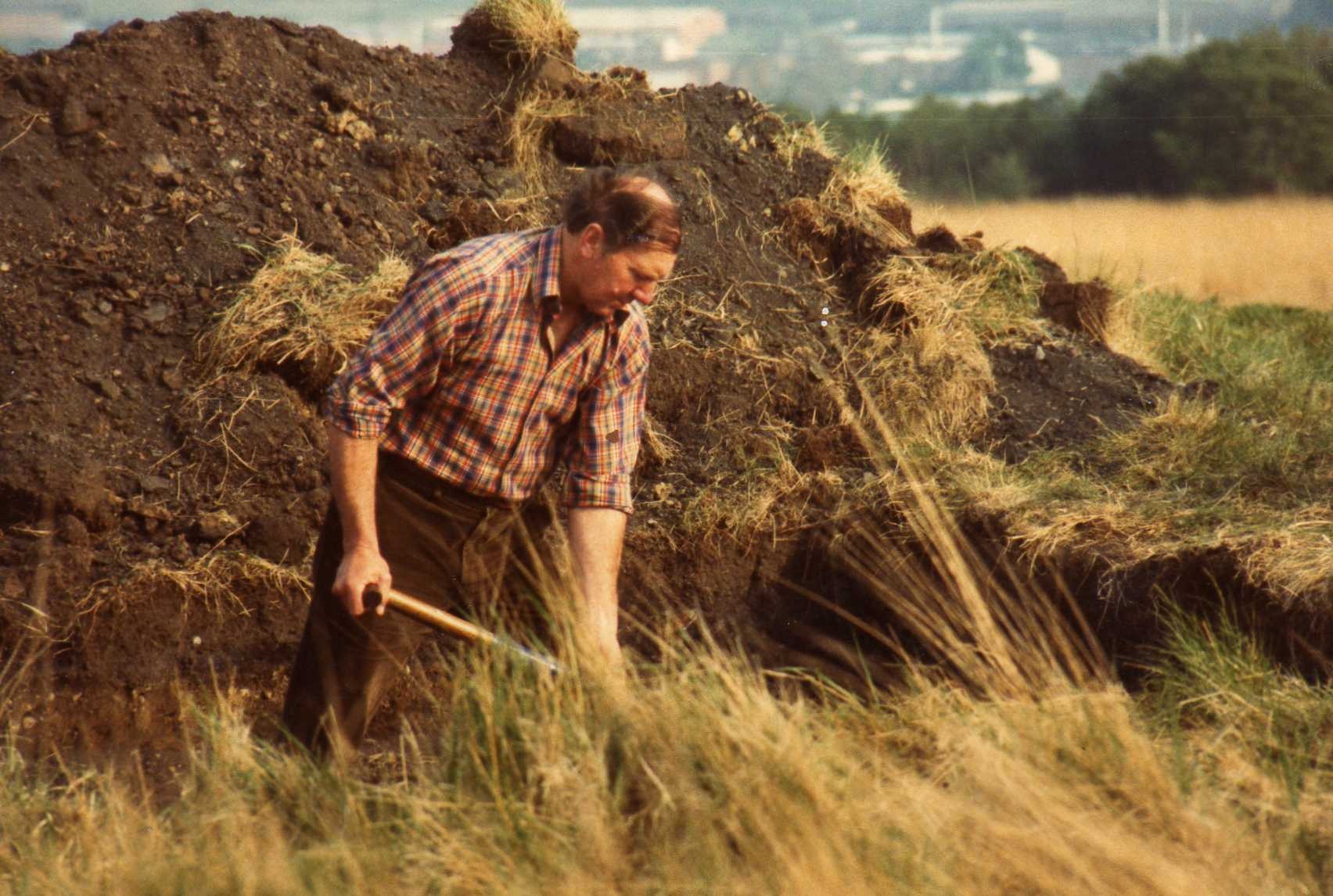
Mr Ray Williams, Chairman of the Committee. From Cwmbwrla, he was a HGV driver and was a well read person on Welsh History. A Deacon of Jerusalem Chapel of Fforestfach, where his wife ran the newspaper shop. He was a family man and enjoyed walking in the countryside and many little holidays with is wife and family all over Wales and especially in their little caravan in the Llandovery area.
Delivery of the Stone
The Raising of the Stone
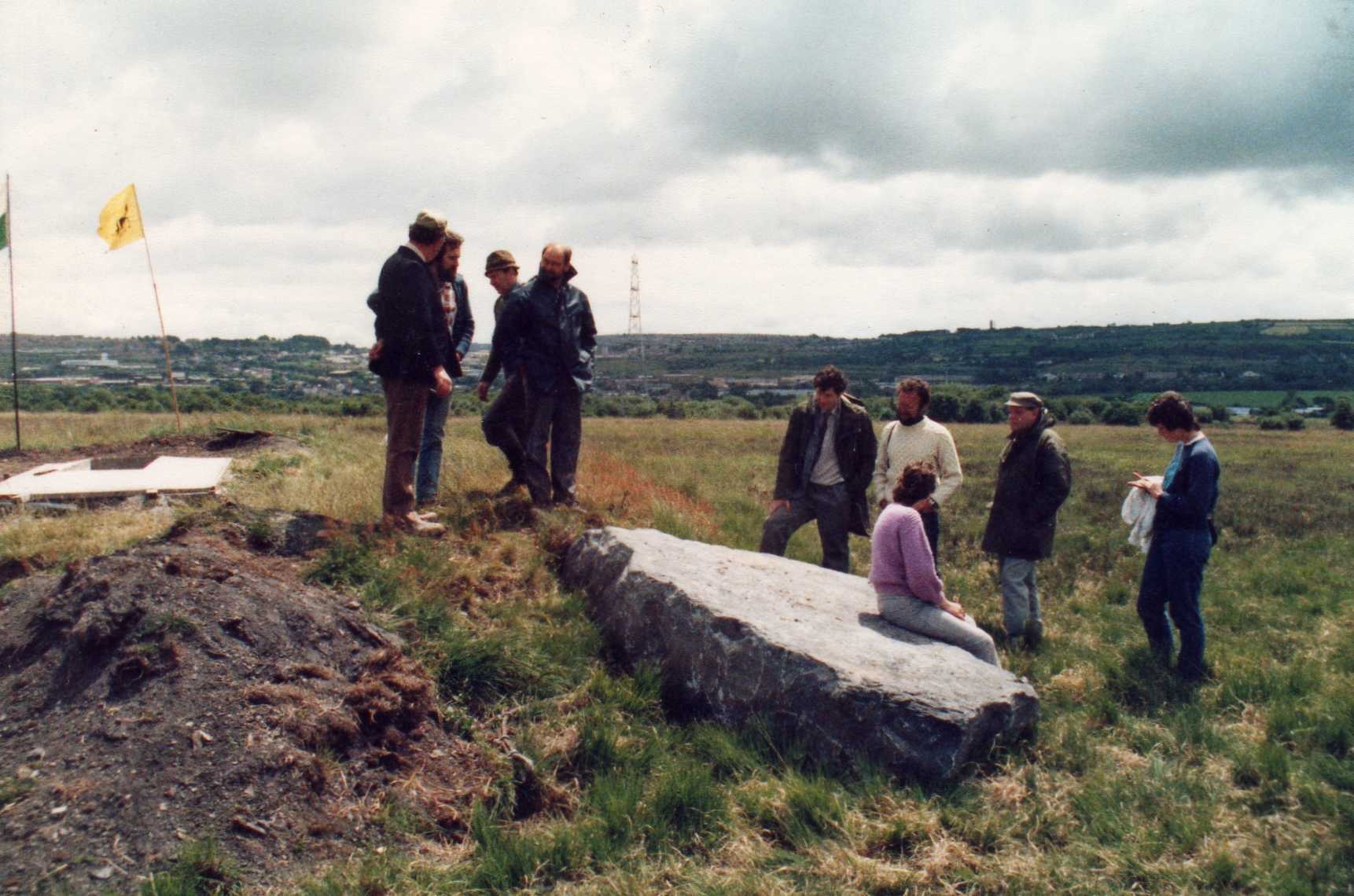
- The Stone was manhandled into the prepared trench and checked meticulously for levels. Cement was mixed by hand and placed around the Stone. A small group of the Committee had brought food and tents to stay overnight to ensure that the concrete ‘went off’ soundly and without vandalization. As the night drew in, they lit a small fire and had some food to recover from their efforts.
- Two policemen parked their car and approached the group to find out if they were up to ‘no good’. They took some persuading that a Chapel Deacon and a few other respectable people were there with permission from the Council!
The Craving of the Stone
- During the following week, Master Stonemason, Mr Harry Benbow, came along and carved the 1136 into the stone.
- The two placques were subsequently put in place with the History of the Battle in Welsh and English. The Master stone mason was Ieuan Evans. He had acquired the slate free so donated them to the Memorial.
The Battle of Gower Memorial Stone
Welsh History on Garn Goch for our Community

The Unveiling Ceremony.
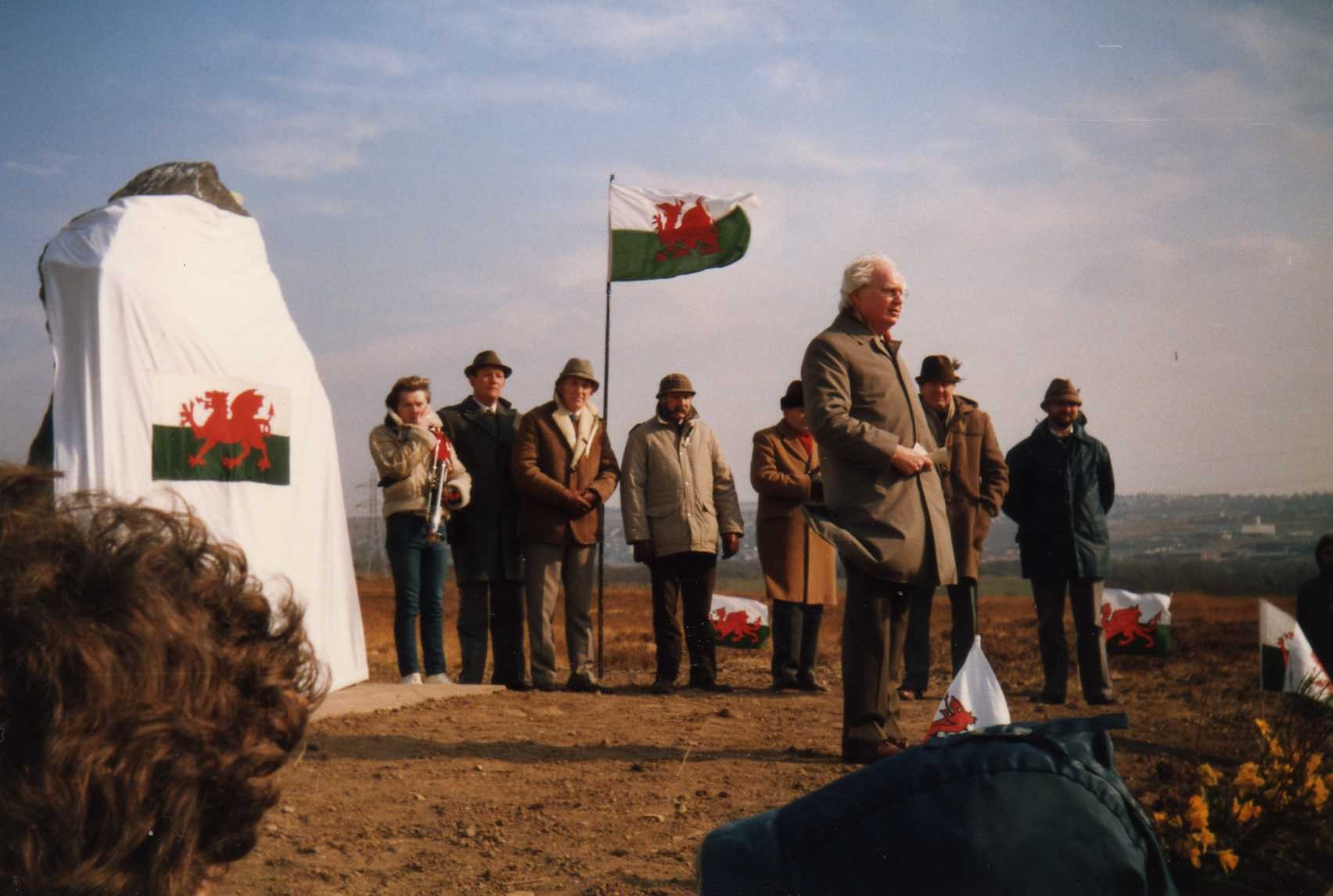
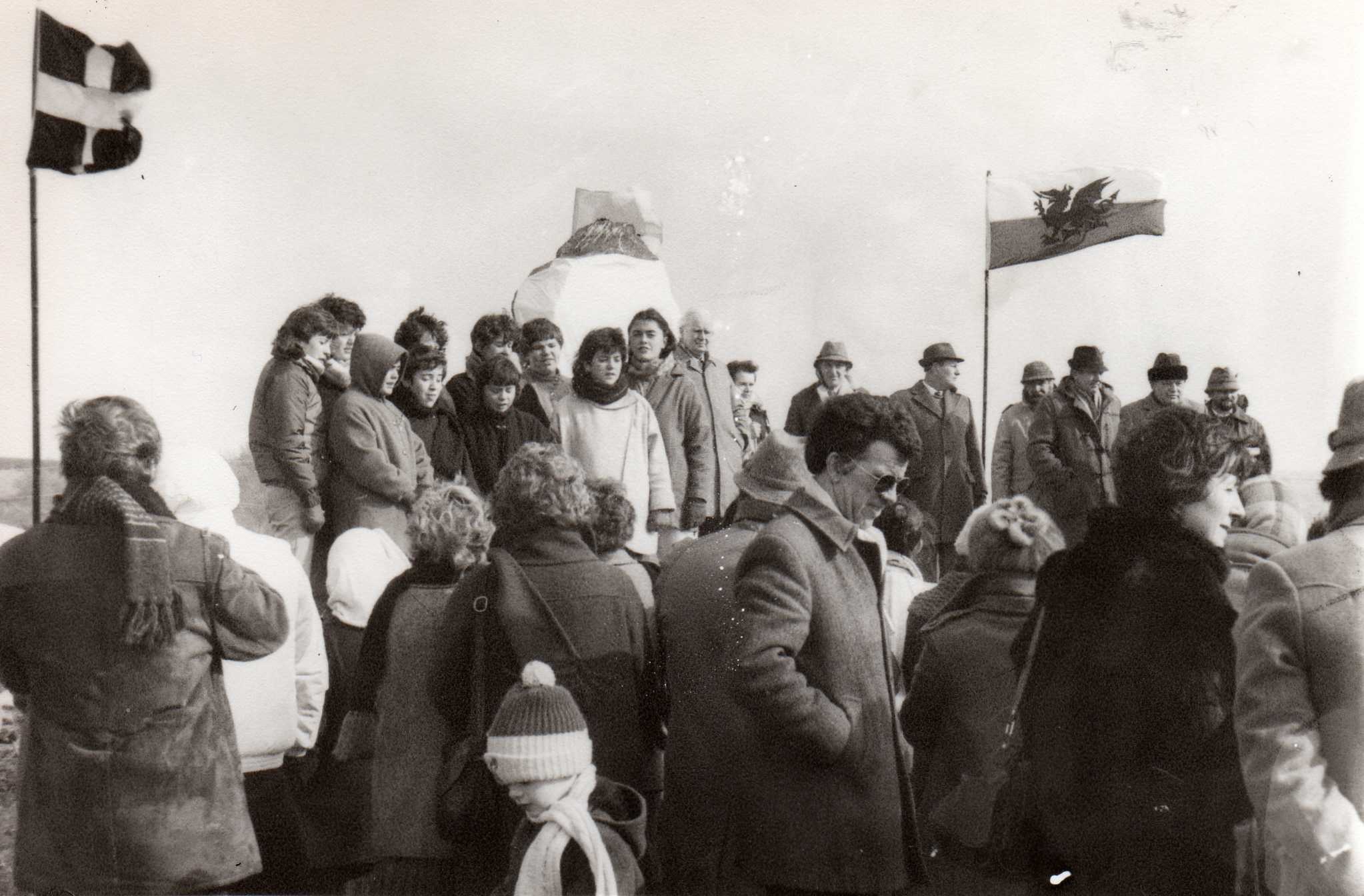
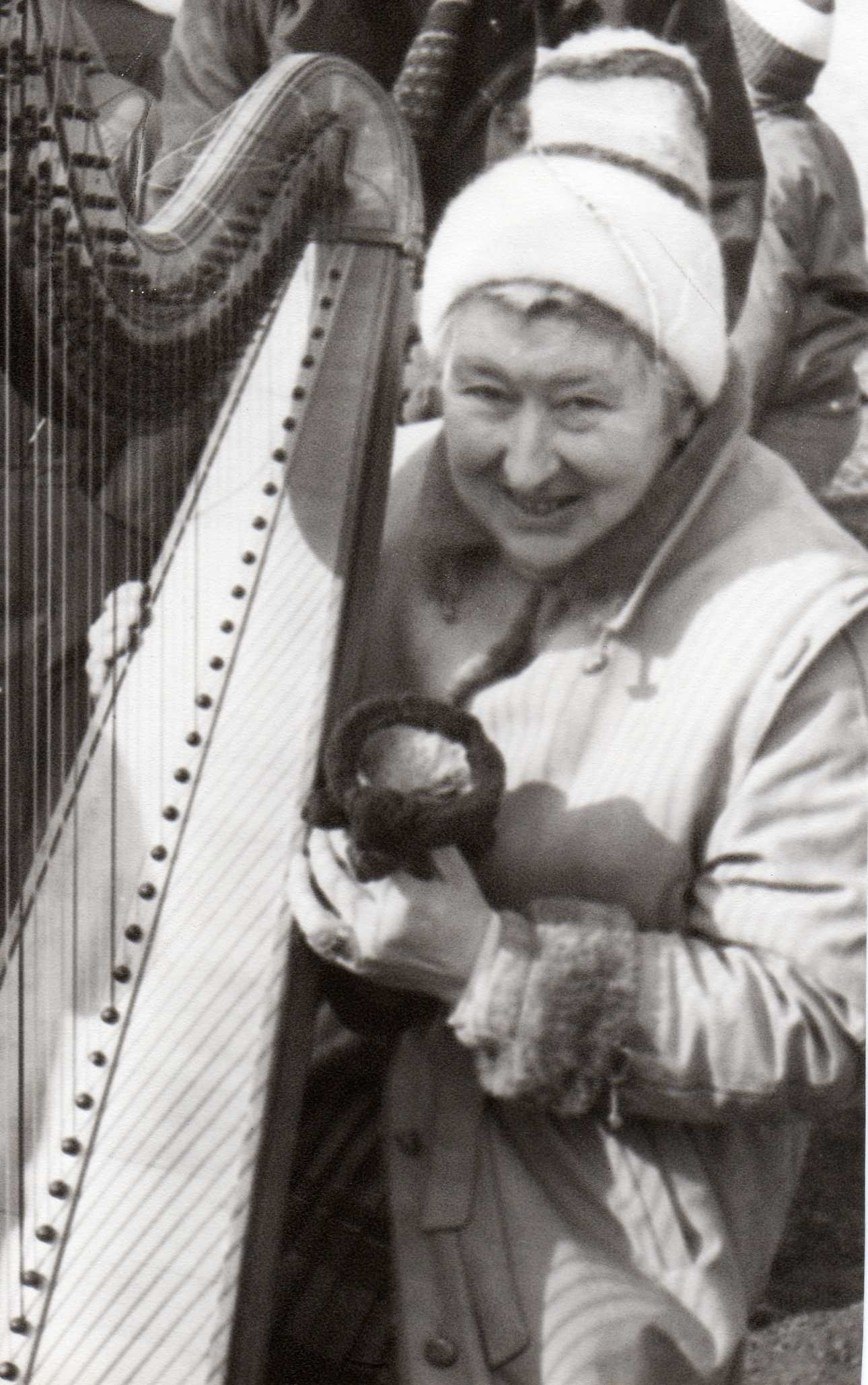
- On St David’s Day 1986 The unveiling ceremony with flags and trumpet was attended by many people including a childrens Choir, a Harpist, and Mr Gwynfor Evans MP who gave a short speech and unveiled the Stone.
Listed on the Imperial War Museum Website link to view record